
Vajpayee had always felt that India must act with conviction and panache. He decided that, irrespective of the attendant risks, he would undertake what many felt was a precarious course. A fascinating excerpt from N K Singh's Portraits Of Power: Half A Century Of Being At Ringside on Atalji's 96th birthday, December 25.

During the 11 years ending FY15, Tata Sons cumulatively earned dividend income of around Rs 31,500 crore from TCS.

Parliament on Thursday cleared the decks for the rollout of the historic Goods and Services Tax from July 1 as it approved four supporting legislations to usher in the one-nation-one-tax regime.

The Indian economy was on an impressive growth path through the first decade of this century till it was brought to an abrupt halt by the policy inertia during UPA2 and the Modi government's inability to restore economic and financial momentum. Fascinating glimpses of what went wrong from Puja Mehra's must-read book The Lost Decade: How India's Growth Story Devolved Into Growth Without A Story.

Democracies avoid serious political turbulence only so long as they ensure that the relative level of inequality between the rich and the poor does not become excessively large, says Vice President M Hamid Ansari.

India still has to go a long way to implement reforms in various sectors.
Power plant load factors are at historic lows of around 60 per cent.

The year 2015 may well turn out to be a watershed in global macroeconomic adjustment.

The finance ministry on Wednesday said the government will borrow Rs 4.34 lakh crore in the second half of the current fiscal to meet its expenditure requirement amid COVID-19 crisis afflicting the country's economy.

The RBI panel has also recommended a government-sponsored 'fund of funds' of Rs 10,000 crore to support the venture capital and private equity firms investing in the MSME sector.

This means lower losses on fuel sales by Indian oil companies and a shrinking oil subsidy bill for the government.

The government has made it much harder for tycoons to get special dispensations from Delhi

'Four times in Indian history, in 1992, 2000, 2007 and now, markets are at 25 times price-earnings.'
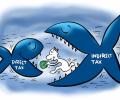
Before 2019, an estimated 22 million individual income-tax returns did not have to pay any taxes. But after the change in the exemption level, another 13 million individual tax returns did not require to pay taxes. Thus, of about 58 million returns, as much as 63 per cent or 35 million went out of the direct tax net, A K Bhattacharya points out.

Investors booked profits at higher levels despite the growth oriented Budget.

'Swachh Bharat Cess imposed last year should be made broad-based.' 'Budget should be predominantly economy/ business-oriented and problem-solving rather than political consideration-based.'

The boom in organised retail will set the tone for major economic overhaul. The ripple effect will be improved supply chains, volume output, integration into global commerce, and higher tax collection, notes T N Ninan.
As a consensus remains elusive on key economic policies like foreign investment norms, industry leader Deepak Parekh has said India's FDI policy is akin to 'inviting guests over to our house, but not opening the door'.

Outlining seven principles of engagement for closer cooperation between India and China, Prime Minister Manmohan Singh on Thursday said the two countries should show sensitivity to each other's interests and sovereignty and move quickly to resolve the boundary issue.

India's economy is not like Western ones, and thus needs restrained fiscal policy even during a recession, says Ajay Shah.

The failure to restructure our armed forces in line with contemporary needs 14 years after the Kargil war will impose strategic costs beyond just delays and scandals, says Nitin Pai
BJP chief Amit Shah said that the government has brought the country out of policy paralysis.

Fix India's real estate sector. Fix India's public sector banks, advises Tamal Bandyopadhyay.
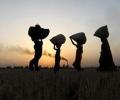
In the near term, the key driver will still be the government's fiscal spending.

Was Kerkar duped by his employees, as he claims, or did a cocktail of greed, poor cost control and bad management bring the travel firm down, wonder Pavan Lall and Aneesh Phadnis.

'The government and the RBI have been playing a very good part in terms of inflation management.'

The debate on the constitutionality of tribunals has not been set to rest as yet, says Gopal Krishna.

Capital flows have become much more skittish and volatile during this period, with short-term horizons dominating allocations.

'It's hard to call whether the Indian markets will go through a time or price correction.' 'There could be a swift 5 to 10 per cent fall in the market in the next two months or there could be a gradual fall and six months sideway movement.' 'Eventually, I think there will be a bit of both.'

Be a fox by temperament and a hedgehog by conviction, Gaurav Dalmia tells Bhupesh Bhandari. Then, he explains why.

The Narendra Modi government's alacrity in promoting ease of tax administration, a critical component in the ease of doing business index, has set in motion several incremental policy and administrative reforms, says Mukesh Butani.
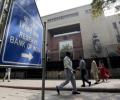
A cut in rates would have encouraged the banks to lend aggressively on the retail front.

The lockdown that crippled the entire logistics, delivery and supply chain network to near zero, was enough to deal a body blow to India's fastest growing unicorn whose very business model saw a severe disruption, like several other firms and sectors.

The rouble has fallen about 45 per cent against the dollar this year.

'The mood in Beijing is already nervous and feverously watchful.' 'Developments in China will be scrutinised as intensely and nervously as the ones in Washington,' says Claude Smadja.

The HSBC/Markit Purchasing Managers Index for the services industry inched up to 47.2 in November from 47.1 in October, the fifth sub-50.0 reading and indicated an output contraction across the Indian service economy.

HDFC twins, Axis Bank, ICICI Bank and SBI from the financial space gained between 1-2.7%.

'...and defensive until the global macro headwinds turn more benign.'

The marketplace was simply not conducive to the extension and evolution of broadband networks, particularly for less dense rural markets, so connectivity and services suffered.

Aiming to enhance quality of life while conserving the planet, Fourth Partner has ventured into the disruptive sector of solar power
 © 2026 Rediff.com - Advertise with us - Disclaimer - Privacy Policy - Sitemap - Feedback - About us - Terms of use - Grievances